
In memoriam: Michael Sela

Michael Sela, an immunologist and synthetic chemist who helped develop drugs to treat multiple sclerosis and cancer died May 27, 2022, in Rehovot, Israel. He was 98.

A member of the American Society for Biochemistry and Molecular Biology since 1968, Sela was the sixth president of the Weizmann Institute of Science and founding director of its immunology department.
Sela was born Miechzslaw Salomoniwicz in Poland on Feb. 28, 1924. Rising antisemitism drove his family first to Romania, and then to Palestine, where Sela arrived at age 17. He earned a master’s degree in chemistry at the Hebrew University in 1946, then moved to Italy to help resettle Jewish refugees and served as a diplomat in Prague. In 1950, he went to the Weizmann Institute as a doctoral student of Efraim Katzir, later a president of Israel. He earned a Ph.D. in chemistry through Hebrew University.
Sela’s work on synthetic antigens helped illuminate how genes control the immune response. He was one of the first chemists to create multichain polymers of amino acids and polypeptide proteins. This basic science indirectly led to his co-inventing the drug Copaxone (glatiramer acetate) for multiple sclerosis and three cancer drugs cetuxibab, necitumumab and panitumumab.
In addition to serving as president of the Weizmann Institute from 1975 to 1985, Sela led the International Union of Immunological Societies, chaired the Council of the European Molecular Biology Organization and joined the Global Advisory Committee of the World Health Organization. He was a member of the Israel, U.S. National, Russian, French and Pontifical academies of sciences.
Among many honors, Sela received the 1980 Gairdner Foundation International Award, UNESCO's Albert Einstein Golden Medal in 1995 and the 1998 Wolf Prize in Medicine, shared with his first grad student, Ruth Arnon.
Sela enjoyed and supported the performing arts, from the Batsheva Dance Company to classical music, jazz, theater and opera. He was a gifted linguist, who mastered Polish, Romanian, Hebrew, German, Russian, French, English, Italian and Czech.
Sela’s first wife, Margalit Liebman, died in 1975. He is survived by his wife, Sara Kika; daughters, Irit, Orlee and Tamar, and their spouses; grandchildren; and great-grandchildren.
Enjoy reading ASBMB Today?
Become a member to receive the print edition four times a year and the digital edition monthly.
Learn moreGet the latest from ASBMB Today
Enter your email address, and we’ll send you a weekly email with recent articles, interviews and more.
Latest in People
People highlights or most popular articles
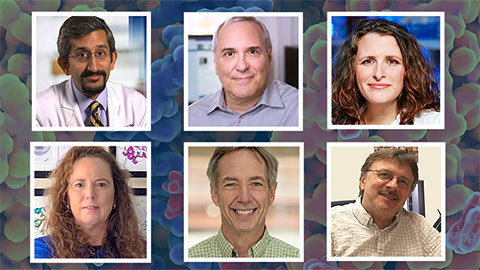
ASBMB members receive ASPET awards
The American Society for Pharmacology and Experimental Therapeutics awards Simone Brixius–Anderko, Paul Insel, Sudarshan Rajagopal, Emily Scott, Alan Smrcka and Jürgen Wess for their excellent research and mentoring work in pharmacology.
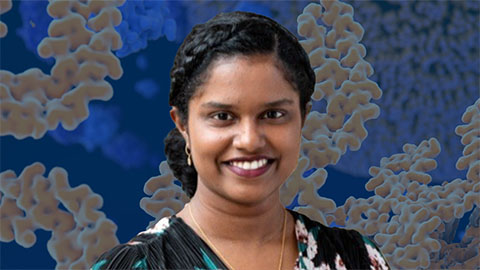
Kozul honored by Washington University
She received the 2025 Elliot L. Elson Education and Training Award.
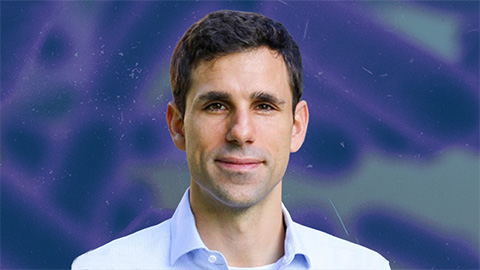
de la Fuente honored for AI research
The award will support the development of an AI system called ApexMol, a 3D structure–informed, agentic large language model designed to create new biomolecules.
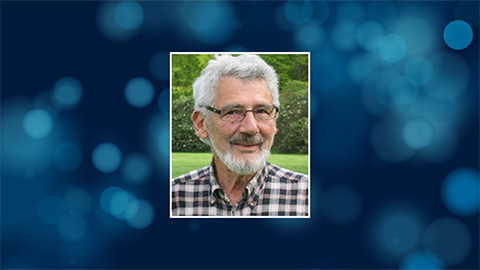
In memoriam: Peter Roepstorff
He was a leading researcher in biological mass spectrometry, mapped protein function in living organisms and was an ASBMB member for 19 years.
Flipping lipids and slime molds
A dull first job nearly pushed JBC associate editor Todd Graham out of science. Then a slime mold project changed his path. Now, he studies membrane biology and reflects on discovery, persistence and mentoring through uncertainty.
ASBMB members receive RNA Society awards
The RNA Society awards Brenda Bass, Can Cenik and Karin Musier–Forsyth for their achievements in RNA research and innovation. Winners will be recognized at the closing awards ceremony of the RNA 2026 annual meeting.