
In memoriam: Beverly Peterkofsky

Beverly Peterkofsky, a former section chief for the Intramural Research Program of the National Institutes of Health and a member of the American Society for Biochemistry and Molecular Biology since 1970, died in Bethesda, Maryland, on June 13, 2022. She was 90.

Born Beverly Ann Heiden in July 26, 1931, she grew up in Mayfield and Carbondale, Pennsylvania, in the state’s coal mining-region, where her family ran a store. The Great Depression drove the Heidens to Brooklyn, New York, where she attended high school and went on to Brooklyn College to study chemistry.
After earning an undergraduate degree, Beverly Heiden worked as a technician at New York University before starting graduate studies in biochemistry there. At NYU, she met a fellow grad student, Alan Peterkofsky, who would become her husband of 66 years. Beverly left NYU with a master's degree when the couple moved to Bethesda, Maryland, where Alan served as a Public Health Service officer at the NIH.
Beverly Peterkofsky earned a Ph.D. in biochemistry at George Washington University, which launched her career of more than four decades at the NIH. She became a lead scientist at the National Cancer Institute in a time when few women achieved that status. Over the years, she served as a role model and mentor for numerous scientists, notably women.
Peterkofsky made seminal contributions to the study of connective tissues. She showed how factors inlcuding collagen and metabolites contribute to the growth and survival of cells such as fibroblasts. In addition to Peterkofsky’s basic scientific findings, she studied the role of the connective tissue during disorders such as scurvy. Later in her career, she explored cell culture models and aging.
When not immersed in medical science, Peterkofsky played the violin with the NIH Orchestra and local string quartets. She also spent free time as a sculptor, graphic artist and genealogist.
Beverly Peterkofsky is survived by her husband, Alan, and their sons, Don and Roy.
Enjoy reading ASBMB Today?
Become a member to receive the print edition four times a year and the digital edition monthly.
Learn moreGet the latest from ASBMB Today
Enter your email address, and we’ll send you a weekly email with recent articles, interviews and more.
Latest in People
People highlights or most popular articles
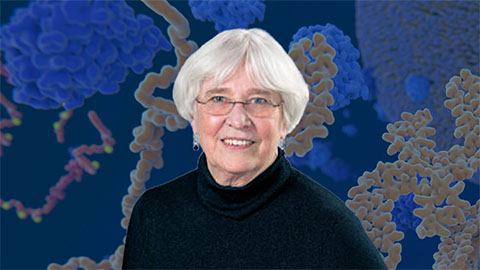
Kimble honored for lifetime achievement in genetics
She received the 2026 Thomas Hunt Morgan Medal and will be honored with a dedicated online profile and seminar.
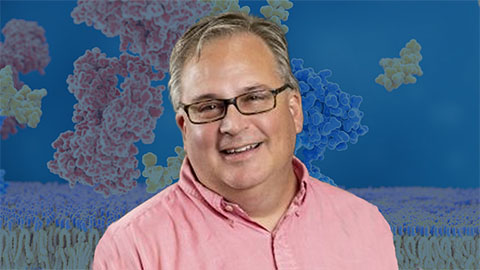
Janetka named distinguished professor
Washington University awarded him the inaugural Carl Frieden Distinguished Professorship.
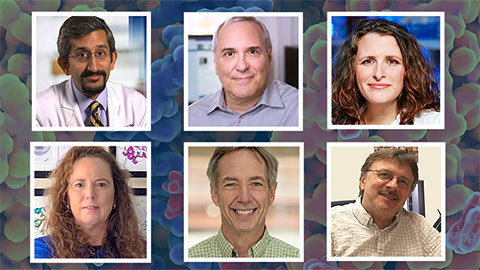
ASBMB members receive ASPET awards
The American Society for Pharmacology and Experimental Therapeutics awards Simone Brixius–Anderko, Paul Insel, Sudarshan Rajagopal, Emily Scott, Alan Smrcka and Jürgen Wess for their excellent research and mentoring work in pharmacology.
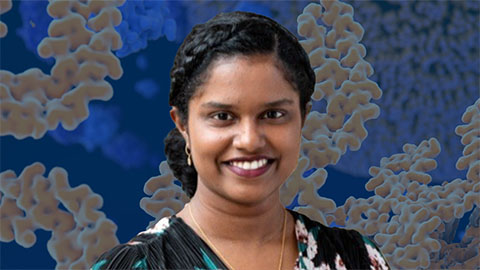
Kozul honored by Washington University
She received the 2025 Elliot L. Elson Education and Training Award.
de la Fuente honored for AI research
The award will support the development of an AI system called ApexMol, a 3D structure–informed, agentic large language model designed to create new biomolecules.
In memoriam: Peter Roepstorff
He was a leading researcher in biological mass spectrometry, mapped protein function in living organisms and was an ASBMB member for 19 years.