
Thicker glycocalyx barrier helps cancer evade immune system

One of the ways that cancer cells hide from the body’s immune system is by forming a thin surface barrier called the glycocalyx. In a new study, researchers examined the material properties of this barrier with unprecedented resolution, revealing information that could help improve current cell-based cancer immunotherapies.
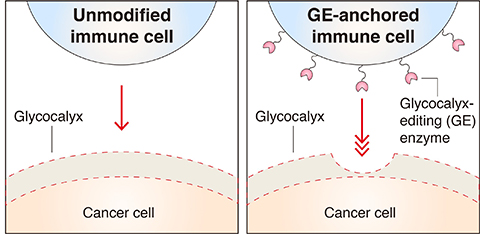
Cancer cells often form the glycocalyx with high levels of cell-surface mucins, which are thought to help protect the cancer cell from immune cell attack. However, a physical understanding of this barrier has remained limited, especially as it relates to cell-based cancer immunotherapies, which involve removing immune cells from a patient, modifying them to seek and destroy cancer, and then putting them back into the patient’s body.
“We found that changes in the thickness of the barrier that were as small as 10 nanometers could affect the antitumor activity of our immune cells or the engineered cells used for immunotherapy,” said Sangwoo Park, a graduate student in Matthew Paszek’s Lab at Cornell University in Ithaca, New York. “We used this information to engineer immune cells that can get through the glycocalyx, and we hope this approach could be used to enhance current cell-based immunotherapies.”
Park will present the findings at Discover BMB, the annual meeting of the American Society for Biochemistry and Molecular Biology, March 25–28 in Seattle.
“Our lab has advanced a powerful strategy called scanning angle interference microscopy (SAIM) for measuring the nanoscale dimensions of the cancer cell glycocalyx,” said Park. “This imaging technique allows us to understand the structural relationship of cancer-associated mucins to the biophysical properties of the glycocalyx.”
The researchers generated a cellular model to precisely control the cell-surface mucin expression to mimic the cancer cell glycocalyx. They then combined SAIM with genetic approaches to study how the surface density, glycosylation and crosslinking of cancer-associated mucins affect the thickness of the barrier at the nanoscale. They also analyzed how the glycocalyx thickness affected a cell’s resistance to attack by immune cells.
The study revealed that the thickness of cancer cells' glycocalyx is one of the major parameters determining immune cell evasion and that engineered immune cells worked better if the glycocalyx was thinner.
Based on this knowledge, the researchers engineered immune cells with special enzymes on their surface to allow them to attach to and interact with the glycocalyx. Experiments performed at the cellular level showed that these immune cells were able to overcome the glycocalyx armor of cancer cells.
Next, the researchers plan to determine whether these findings can be replicated in the laboratory and, eventually, in clinical trials.
Sangwoo Park will present this research during the Regulatory Glycosylation Spotlight Session from 2–3 p.m. PDT on Sunday, March 26, in Room 608 of the Seattle Convention Center (abstract). Contact the media team for more information or to obtain a free press pass to attend the meeting.
Enjoy reading ASBMB Today?
Become a member to receive the print edition four times a year and the digital edition monthly.
Learn moreGet the latest from ASBMB Today
Enter your email address, and we’ll send you a weekly email with recent articles, interviews and more.
Latest in Science
Science highlights or most popular articles
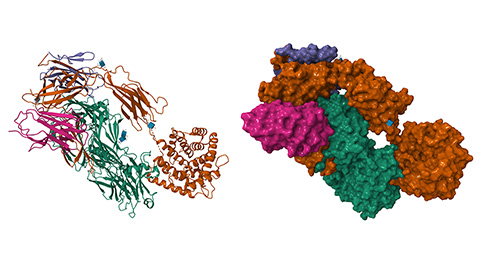
When things get SAPpy: Novel insights into complement
Researchers have defined interactions between an innate immune protein and two of its known binding partners. They identified potential areas of crosstalk between the two binding interactions.

Glutathione pathway implicated in rare disease
Researchers found that glutathione metabolism plays a central role in the pathogenesis of rare disease methylmalonic aciduria using a novel multiomics approach.
A p-value for proteins
Kyoto University researchers developed UniScore, a new tool that uses a target-decoy method to filter false positives in proteomic searches, helping scientists set thresholds and improve reliability when analyzing complex protein data.
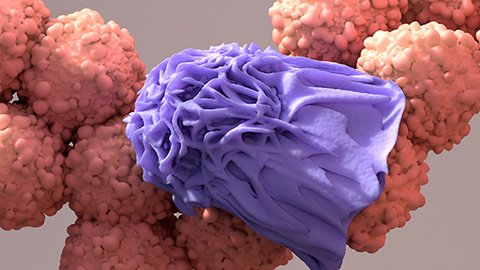
Novel way to uncover tumor microenvironment proteomics
Researchers at the Weizmann Institute of Science developed a novel single-cell approach that facilitates the study of proteins surrounding lung cancer cells.
Sizing up cells: How stem cells know when to divide
Stanford University researchers find that stem cells control their size early in cell division across living multicellular systems.

When oncogenes collide in brain development
Researchers at University Medical Center Hamburg, found that elevated oncoprotein levels within the Wnt pathway can disrupt the brain cell extracellular matrix, suggesting a new role for LIN28A in brain development.